

[ad_1]
As Muslims across Ontario marked the end of another Ramadan under the province-wide blockade, front-line staff said that observing the arduous path of the past month during the pandemic was simply arduous.
During the third wave of struggle with Ontario in April and a record ICU admission, Muslim doctors and nurses have been observing the holy month of Ramadan, avoiding food every day from dawn to sunset.
With the end of this month, Eid al-Fitr means “Festival of Break of Fast” (Festival of Break of Fast) will be held on Thursday. As this year’s province-wide home order order is still valid, So the situation this year is slightly different.
Jehan Kadri, a registered nurse in London, used this term to describe her as a Muslim frontline worker for the past month.
Kadri has worked in the emergency room of the university hospital for nearly five years. She said that although this may be the second month of fasting after the lockdown, the situation is quite different.
In order to make this month more spiritual, we try to focus on understanding the purpose of Ramadan, and strive to develop better habits and establish our character.-Jehan Kadri, RN, London, Ontario.
“For us, this year is different from any previous year. We absolutely don’t want to be locked up again. Last year was difficult in our own way, but this year is definitely more difficult.”
“Every day brings different challenges, and you never know what to do.”
Kadri said that although nurses and doctors are used to long shifts of 12 hours, the working day during Ramadan has become more stressful.
As of Wednesday, the London Health Sciences Centre is caring for 71 COVID-19 patients, 37 of whom are in intensive care. Through out-of-region transfers, 32 patients in London received treatment from external medical districts, including 8 emergency care and 24 intensive care units.
She said: “This is very different because the pandemic has brought all these additional pressures, as well as the risk of COVID-19, and the changes in our daily customs as Muslims during Ramadan.”
“I can’t eat at work, but this is my desire. We work in a very dry environment, and wearing masks all day makes work challenging.”
Kadri, who has a teenage son and daughter, said she must stay at home and avoid gatherings, and distance learning has caused harm to her children.
“In order to make this month more spiritual, we try to focus more on understanding the purpose of Ramadan, and strive to develop better habits and build our character.”
Preach through straights
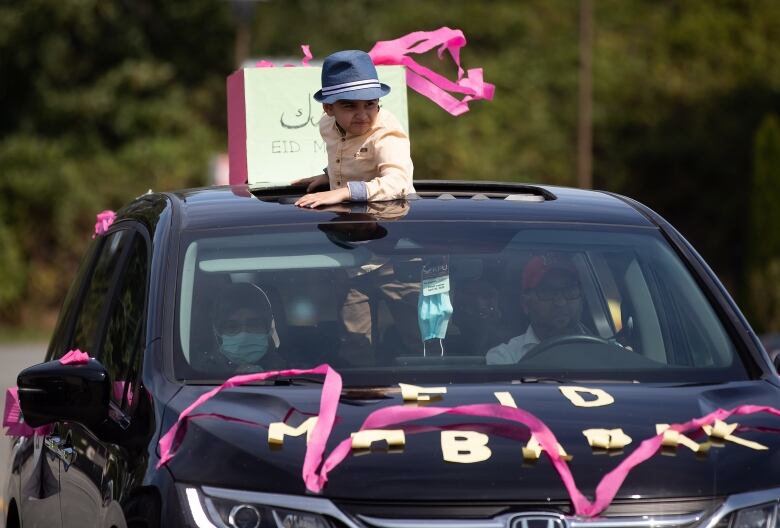
Kadri will celebrate Eid al-Fitr with her husband and children, and celebrate the anniversary (Facetime) with friends and family all day long, and take part in a Friday drive.
The prayer was approved by the Middlesex-London Health Department. When Aam preached, the cars would line up and people would remain in the car.
Ahmed Hegazi, an anesthesiologist at the University Hospital, said that between work and staying with family, Ramadan this year is a blessing in disguise.
Hegazi said: “It’s all at home, but now is a good time because you can establish more connections with your family and you can concentrate.”
“I find Ramadan is a good time to exercise self-control over my daily activities and re-arrange priorities to fulfill obligations.”
He said that although it is a quiet month and there are no gatherings, it is the spirit of the “Holy Spirit” to spend it on himself and his family.
“We obviously missed the congregation, but the whole family has a lot of sincerity in doing this alone.”

In the past few weeks, Hegazi mainly worked in the hospital’s ICU, having to balance overnight and daily shifts while fasting from dawn to sunset.
“Some nights, I have to stay up all night with seriously ill COVID patients.”
“Get together” virtually
For Hegazi, Eid al-Fitr does not look much different from a few years ago because he re-established contact with relatives living in different countries.
The London Muslim community also temporarily organized imams and Islamic Education Coordinator Aarij Anwar (Aarij Anwar) said that on Thursday, the London Muslim community also organized a virtual Eid al-Fitr celebration to “capture the essence of unity.”
The event will start with prayers, then sermons, and finally a trivia game called Beat the Imams. During this month, people will be asked questions and receive special prizes to reward their knowledge of Ramadan and information from the sermons.
Anwar said that it is “essential” to celebrate Eid al-Fitr public gatherings, which will allow them to maintain this while adapting and celebrating a safe way.
[ad_2]
Source link


